Beyond the Label: How Mixed-Methods Research Redefined the "Pet-Friendly" Booking Experience
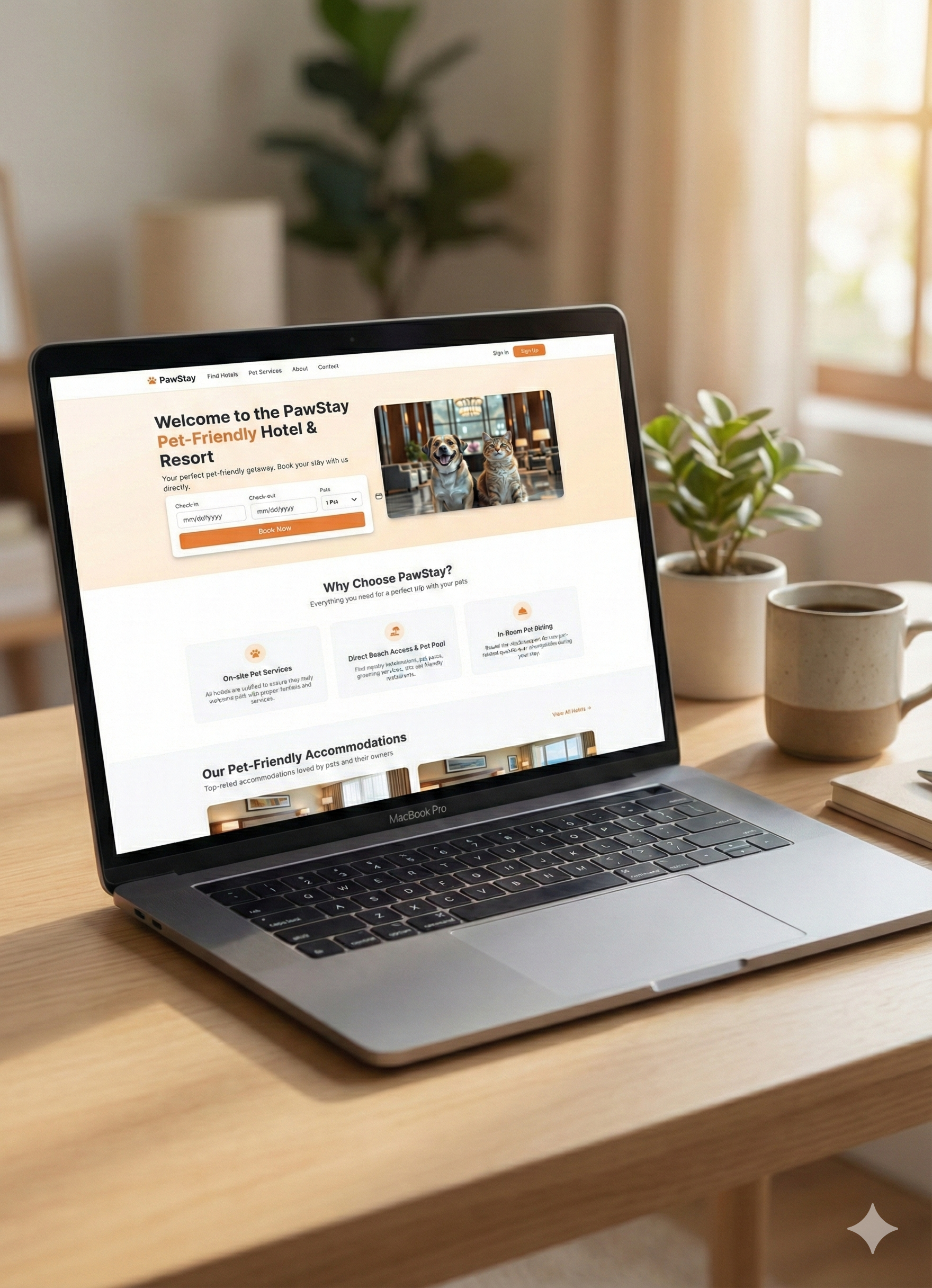
PawStay Boutique Hotel
PawStay Boutique Hotel — a premium destination in the Canarias Islands — was experiencing healthy traffic from targeted ad campaigns, but suffering from low booking conversion rates. Despite one-third of traffic filtering for "Pet-Friendly" rooms, 71% of these high-intent users dropped off before confirming a reservation.
I conducted a comprehensive mixed-methods study involving exploratory user interviews and evaluative task analysis to uncover the roots of client frustration. My recommendations are projected to:
"The site claims to be 'pet-friendly' but provides zero details... it feels suspicious, like they'll just charge me more at the door."
— Customer Support Log- Recover lost revenue by reducing the 71% drop-off rate at the room selection stage.
- Decrease operational overhead by cutting pre-booking support volume by 30%.
- Capture the pet-owner market segment showing high intent but low conversion.
- Protect the "Quiet Luxury" brand identity while expanding to pet owners.
Two distinct, high-value traffic segments.
Archetype 1: The Assurance-Seeking Pet Parent
High-intent traffic actively using "Pet-Friendly" filters but abandoning at the final booking screen. Needs specific pet policies (breed limits, exact fees, pet-free zones) before feeling confident enough to book.
Archetype 2: The Boundary-Conscious Luxury Guest
Premium travellers booking without pets — the highest Average Order Value — who might be alienated by poor pet management. Needs explicit hygiene guarantees and clear "Pet-Free Zone" information.
I recruited 10 participants fitting these profiles for deep-dive remote moderated sessions.
Mixed-methods covering the full booking funnel.
Before speaking to users, I anchored the study in Secondary Market Research and a Competitive Analysis — shifting the organisation's mindset from "we are too expensive" to "we are failing on transparency and certainty."
Each of the 10 remote moderated sessions was structured into two distinct phases:
- Contextual Interview (60 min): Deconstructing the "what" and "how" of users' travel mental models — uncovering the psychological "Why" behind booking anxieties.
- Task-Based Usability Testing (30 min): Uncovering exactly where in the existing application the user feels frustrated using a think-aloud technique.
"It wasn't the price; it was the Certainty Gap."
Finding 1 — The Transparency Deficit
Because finding pet policies is non-intuitive, users perceive the lack of explicit data as suspicious — fearing hidden costs at the door. This directly debunked the stakeholder hypothesis that pricing was the primary issue.
→ Recommendation: Shift pet disclosure to the top of the search funnel. Implement a "Pet Profile" selection (count, size, type) during the initial search phase.
Finding 2 — The Neglected Secondary User
Non-pet travellers experience anxiety when hygiene boundaries are left ambiguous. They need explicitly highlighted "Pet-Free Zones" to feel comfortable — a blind spot no competitor was addressing.
→ Recommendation: Introduce "Pet-Free Zone" filters and clear visual indicators within room and public spaces descriptions.
Finding 3 — Environmental Anxiety
High cognitive load from missing pet-specific imagery (flooring type, pet amenities like beds/bowls) blocks confident decision-making and drives booking abandonment.
→ Recommendation: Enhance room galleries with dedicated "Pet Amenity" photography and implement granular "Environmental Filters" (e.g., Hardwood Floors, Ground Floor Access).
From compliance issue to primary guest strategy.
Research insights shifted the business perspective from treating pets as a compliance issue to treating them as a primary guest entity capable of driving Average Order Value (AOV).
"It shifted how we view our booking funnel. Highlighting the friction for the non-pet traveler was a blind spot we didn't even know we had. This is incredibly strategic work."
— Product ManagementChallenge your core users! Initially, we assumed this project was only about making life easier for dog owners. Expanding the research to include the "Secondary User" (the non-pet luxury guest) changed the product strategy and made the solution twice as strong.
Watch what they do, not just what they say. Conducting contextual interviews was great for understanding the emotional "Booking Anxiety," but the 30-minute usability tasks were where the real breakthroughs happened — giving me the hard quantitative data needed to justify the UI redesign.